Search This Blog

Showing posts with label lombok island. Show all posts

Red Hot Chili Lombok

Red Hot Chili Lombok :-)

What matters is NOT WHERE we go, but HOW we CHERISH the beauty of the earth...
And there I was, with my beloved, JFB, trying to explore another part of the earth this summer. A beautiful island, Lombok, Indonesia...
Lombok is the place where the beauty of the lanscapes, sea, mountains and wildlife melt. And here are there, some pictures to let yourself imagine.
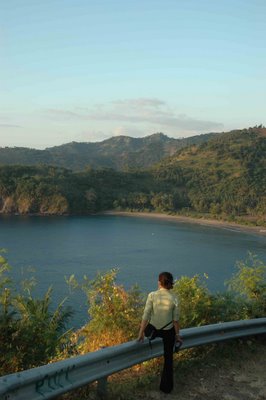
Me, waiting for sunset at beautiful Malimbu...

cute wild dog stared at me at Malimbu, Western Lombok...

Me in my green raincoat looks so tiny beneath Singang Gila Waterfall!

and...it was the "road" that we took to reach the second waterfall, Tiuk Kelep
walking against the stream under the rain... can you imagine how fantastic it felt?

the old tunnels where we walked in to go back to our basecamp at John's Adventure

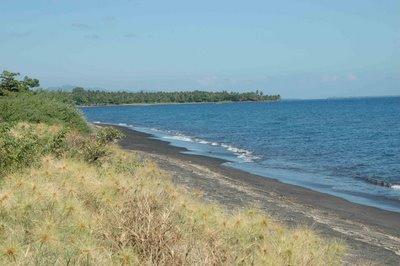
Northern Coast of Lombok, the black-grey sand
mount Agung, Bali, seen from behind the wild grass on Northern Coast of Lombok

Lombok Island : Surfing Paradise for All Surfers

Lombok has a great variety of waves that work on all swell and wind conditions. It’s right next to


Bali, yet far less crowded. The book tells you where to stay cheaply close to the best fun waves, and where to go when the swell gets up and you’re ready to tackle hollow overhead barrels. Lombok’s Gili Islands offer a peaceful escape for a bit of snorkelling and partying too.
Lombok has been an ideal surfing destination for years. Surfers, especially those that come to Indonesia to surf and are prepared to venture further than Bali, which is being, consumed by its own crowds, will discover Lombok rewarding beyond all expectations.
Lombok surfing is less crowd and its good starting point to search secrete spots on east of Indonesia as its neighbor island is Sumbawa where you will find super suck, Yoyo’s or Lakey pipe in Dompu region.
This island, which measures about 80 kilometers north to south and about 70 kilometers east to west, is a much drier and tougher island than generally verdant Bali. This is perhaps why the Sasak (most of population’s ethnic group) name for Lombok is Bumi Gora, which literally means “The Dry Farmland”. The most awesome physical attraction on Lombok is Indonesia’s tallest volcano, the 3726 meter high Gunung Rinjani.


Lombok’s waves, most of which are concentrated on the island’s West Coast and along a south coast ragged with bays, beaches and dramatic headlands. You wont find as many surf spots on Lombok as you can ride on Bali, but they are usually less crowded and physically more beautiful as natural locations. One particular place, known to locals as Bangko-Bangko (but to surfers the world over as Desert Point), is one of the world’s premier left hand surf spots when it’s working. This impulsive, but perfect and long point break requires a swell of good direction and size to fire, but given those requirements it more than produces the barelling goods. Desert starts off small at the take-off, then, as it winds down the reef, the wave will increase in size and barrel on down the line. There are other waves in this southern region and even some in the Gilis, though normally on solid swells.

Lombok Surf Breaks


Desert Point
As with many waves in Indo the tides plays a big role at Deserts. At high tide it can appear 2-3′ and quite fat….then as the tide goes out it begins to fire often turning into 5-6′ left hand pits. The reef is quite shallow and booties are a must. The rip is very strong here and it can hold up to a 10ft swell. A serious wave…but serious fun once you get it wired.
Southern Lombok
Note: In mid to late season it can be impossible to go this way as wind and swell make it too dangerous – it is at the Captain’s discretion as to the best and safest route.
Belongas Bay
A long bay with lots of potential. Mainly best in the early seaon before the winds become too strong. Several rights and left setup depending on the size and direction of the swell.


Selong Belanak also know as Mawi
Mawi needs at least 3 foot of ocean swell to work. Some swells will offer a left and right hand peak and can probably handle up to 6′. This break is not so tide dependant but can get very very sucky at low tide. It is a beautiflly scenic spot and worth a walk on the beach. Keep and eye out for moneys on the headland.
Kuta Beach
Kuta is about the only place along the south coast offering accommodation and restaurants – a good spot to stop for a bit of party action! The bay offers a left reef break that is best at 4-6′ but sometimes to be a bit sectiony. There is a right there also but it is inconsistent although there are stories that in the right swell and wind conditions it can be epic.
Grupuk Bay
A nice bay setup with a left one side and right the other and a peak in the middle. On bigger swells the bommie is also rideable. The right hand point is probably the pick with long bowling waves. Watch the bommie for indications of the sets….don’t get caught inside otherwise it is a long long paddle!
Ekas
Another nice bay setup which requires a fair bit of sell to turn on. Outside Ekkas is long left with some fast hollow sections. Inside Ekkas is right but needs more swell to break. Best at mid tide.

Senggigi Beach Lombok – Luxury Resort and Spectacular Beaches and Capes

Senggigi Beach Located on the western coast of Lombok is the small village and resort area of Senggigi. Tall coconut trees shadow two stunning bays and the white sand beach of Senggigi. The bays are ideal for swimming snorkeling and other popular water activities and its impressive hillsides provide a dramatic backdrop and breathtaking scenic road trips along the coast to the north.
Senggigi over the years has become the most popular tourist area of Lombok, presenting a diverse range of hotel accommodations, from deluxe four-star resort properties to simple home-stays. As well, restaurants, cafes, entertainment venues can all be found along the main Senggigi road and on certain areas along the beach.
Senggigi is the main tourist strip of Lombok, stretched out along nearly 10 kilometers of beachfront just to the north of the capital Mataram.
Senggigi can be broadly divided into three parts: northern Mangsit Beach, central Senggigi and the southern stretch near Batu Bolong, with headlands separating the three. Mangsit has quiet resorts and very little other development, while nightlife and other restaurants are concentrated in Senggigi and the Batu Bolong area.
That said, Lombok’s post-2000 misfortunes hit Senggigi hardest of all, with many developments halted and a few closed and barred up. Especially during the day the area resembles a ghost town, with many if not most shops closed, restaurants empty and hawkers and touts pestering the (few) passersby. Things are slowly starting to improve again, with a few new villas going up, but for time being the overall feeling is a little depressing and most visitors either stay in the manicured grounds of their resorts, or head directly onward to the Gili Islands.
Additional Information:
Get in

Senggigi is about 15-20 minutes north of Mataram and its airport. Taxis charge around Rp 30,000 for the trip, while bemos will cover the distance for under Rp 5,000.
Get around
Taxis are common and even the ones waiting around for customers are usually happy to use the meter. Bemos also zip through Senggigi on their way north and south and are happy to pick up passengers; pricing is a little random, but a couple of thousand rupiah will suffice for most trips.
See
Pura Batu Bolong, 2 km south of Senggigi. Small Hindu temple located in a scenic spot at a cape overlooking Senggigi beach, named after a rock (batu) with a hole (bolong). At the tip is an empty chair representing Brahma, the god of creation. Free entry, but you’ll have to loan a sash (Rp5,000 a throw) from one of the urchins if you don’t have one already. Sunsets seen from here can be very impressive.
Senggigi Beach. A spit of sand stretching out from central Senggigi, this is Senggigi’s raison d’etre but, by Indonesian standards, it’s all that spectacular. The beach is clean and pleasant to swim,  Some local surfers brave the smallish waves at Senggigi Reefs..
Buy
Senggigi Abadi Supermarket.
Senggigi Jaya Supermarket
Blue Market at Senggigi Plaza
Eat
There are plenty of eating options in Senggigi.
Bale Tajuk, Jl. Senggigi Raya. Small but popular eatery offering a range of local and Western dishes, including a fairly decent Lombok-style ayam taliwang (Rp20,000).
Other Restaurants we should recommend you is:
Taman Restaurant
Bumbu Restaurant
Matahari Restaurant
Yessy Restaurant
Asmara Restaurant
De Quake Restaurant at Art Market
The Office Restaurant at Art Market
Sea Star Restaurant at Art Market
Gara Gara Restaurant at Senggigi Plaza
Cak Nur Warung
Ye Jeon, Senggigi Square 2F. Surprisingly authentic Korean restaurant, especially given that it’s probably the only one in all Lombok. Single dishes are reasonable (try the bibimbap, Rp35,000) but sets with a full spread of banchan appetizers are pricier at Rp80,000 and up, with 21% service/tax slapped on top.
Drink
Senggigi’s nightlife suffers from far more supply than demand, with punters thinly spread and bars desperate for custom.
List of Bar and Night Clubs in Senggigi Area
Happy Cafe
Papaya Cafe
Tropicana Cafe
Out Back Cafe
Marina Cafe
The Square Cafe
Sahara Cafe
Berry’s Cafe
Internet Cafes:
Millinium Internet Cafe
Javaline Internet Cafe
Super Star Internet Cafe
Planet Senggigi Internet Cafe

Malimbu Hill : The Most Spectacular Scenic View in Lombok Island

Malimbu Hill is located in West Lombok district, West Nusa Tenggara province. The hill stands in a row at Singgigi littoral area. Malimbu is a highland area that is the zone of Senggigi beach. “Malimbu” derives from a famous tourism destination in America, Malibu. It was adapted to Malimbu by local inhabitants. It faces to a white sand beach, which is as beautiful as other beaches in Lombok Island. As usual, the tourists will pass by this area when they are having a journey to Gili.
The beauty of its nature and its precious scenery are ideal location for photographers to catch the photograph. Either local or foreign tourists come to the destination to catch the photographs of its beauty. It offers you various landscapes such as turquoise seawater, pounding waves, sunset, Green Mountain and a range of small islands. There are big trees inhabited by monkeys hanging around the location.
Malimbu Hill has a magnificent view where the panoramic scenery of its nature will enchant you while enjoying the sunset, Mount Agung in Bali and the range of Gili (Small islands standing in a row in the north of Lombok Island). It will be very exciting for you who want to enjoy the beauty of Lombok Island especially at evening

Gili Nanggu – Little Caribian in South Lombok


Gili Nanggu  : Little Carribian in In Lombok – Indonesia
Gili Nanggu is a small Island Southwest of Lombok with a beautiful white
sandy beach, it is surrounded by many small Islands, which also beautiful
place for snorkelling and swimming
There are also several Gili islands in the near gili nanggu ideal for snorkeling and diving such as Gili Kedis, Gili Poh, Gili Gede and many more to west side f sekotong bay.
Seeking a serene and calm place for taking holiday sometimes is hard. The place where we can enjoy natural beauty while taking a break off daily work.
Those who are interested in maritime recreation, snorkeling, sunbathing at the beach, or relaxing at a place of natural beauty, why don’t you stay overnight at Gili Nanggu. The island of 12,5 Ha area in Western Lombok is managed with Forest/Virgin Island concepts of unexploited nature. The serenity and beauty of this island makes Gili Nanggu a routine destination for many foreign tourists. They call Gili Nanggu: “The Paradise Island”
On the white sandy beach with calm wave, you are guaranteed privacy- no beach traders or unwelcome visitors. This island is private and only occupied by the management and staff of the resort. The enchanting sea casts a strong spell on many visitors. It’s pristine beauty is a magnet to come and play at the beach everyday. Only by going a few meters down to the shallow seabed, crystal clear waters will reveal multi-colored tame marine fishes. And a wide variety of other sea animals can also be seen.
Sing-song twitter of birds will accompany you to embrace the sunrise; and natural silence during sunset- creating a romantic atmosphere, making Gili Nanggu a suitable place for couples to enjoy their honeymoon. Enjoy the birds, the view and the beach of Gili Nanggu with someone dear to your heart.
This small island(12,5 ha area) with stunning sand white beaches sit in Southwest Lombok ,easily reached by boat from Lembar Harbour or Taun(Tawun).There is only one cheap-moderate resort with thatched cottages and bungalows.
Here in low season(January-April),it’s possible to feel almost alone on this private island.
Here you have a great snorkelling,even for beginners, with a small reef very close from the shore with lots of colourful fishes,get used to people swimming in a crystal calm water.
There is also since 1995 a sea Turtle conservation program with new basins for turtle breeding
Gili Nanggu, situated just off west Lombok, is a small island of 12.5 hectares. Yet the island feels a lot bigger than this, with its undisturbed corners of natural beauty and numerous swimming spots.
The underwater world is also stunning with lots of brightly colored fish swimming close to the beach in the warm tropical water.
Traveling to the island is relatively easy — it’s a 45-minute boat ride from Lembar Harbor in Lombok, or a 15-minute boat ride from Taun Harbor, also in Lombok.
A taxi ride into Lembar from Selaparang International Airport takes about 45 minutes to an hour, while from the airport to Taun takes about 90 minutes.

Gili Islands – Party Island, Great Dive Sites and Spectacular White Beaches


The Gili Islands (Indonesian:Tiga Gili [Three Gilis], Kepulauan Gili [Gili Islands]) are an archipelago of three small islands — Gili Trawangan, Gili Meno and Gili Air — just off the northwest coast of Lombok, Indonesia.


 The islands are a popular destination for Western tourists looking for a remote island experience. Each island has several small resorts, usually consisting of a small collection of huts for tourists, and a restaurant. Most local inhabitants live in the hilly interior of the island. Automobiles and motorized traffic are prohibited on the islands by local ordinance, so the preferred method of transportation is bicycle or the horse-drawn carriage called a cidomo. Diving in and around the Gilis is also popular, although the prices are fairly high due to local cartel activities. The name “Gili Islands” is a bit of a misnomer, because Gili simply means “small island” in Sasak.
GILI TRAWANGAN
Gili Trawangan is the largest of Lombok’s Gili Islands and is the only one to rise significantly above sea level. It is 3km long and 2km wide with a population of about 1000. Of the Gilis, Trawangan has the most tourist facilities; the pub Tîr na Nôg claims that Trawangan is the smallest island in the world with an Irish pub. The most crowded part of Trawangan lies on the eastern side.
On Gili Trawangan (as well as the other two Gilis), there are no motorized vehicles. The main means of transportation are bicycles (rented by locals to tourists) and cidomo (a small horsedrawn carriage). For traveling to and from each of the Gilis, locals usually use motorized boats and speedboats.
The Gili islands are renowned not only for their friendly inhabitants but the total tropical island paradise feeling that they have. The white coral beaches, the warm and inviting waters all invite to snorkeling, sun bathing and of course diving. The diversity of aquatic life is astounding and just off the shores you can find turtles, sting rays, reef sharks, baracudas, and a myriad of small and large fish.
Some of the first inhabitants of Gili Trawangan were from Sulawesi who are fishermen and farmers. Previously Gili Trawangan was covered in forest and deer lived on the island.


GILI MENO
Gili Meno is the middle of Lombok’s three Gilis. It has population of about 300, mainly concentrated on the center of the island. The main income of the population comes from tourism, coconut plantation and fishing. On the west side of the island there is a small shallow lake that produces salt in the dry season. Until a few years ago there was also a small production of seaweed on the reef at the north end of the island. It has swimming beaches all around the island, as well as an impressive bird sanctuary.
GILI AIR
Gili Air is the smallest of the Gilis and it’s closest to the Lombok mainland, making it popular with honeymoon couples and travelers seeking a quiet retreat. It has population of about 1,000 and administratively lies in the West Nusa Tenggara province. The island offers excellent snorkeling and SCUBA diving off its east coast, and turtles can be seen along the coral reef.
Gili Meno, the central island, is home to only a few hundred residents. The most quiet and least exploited island of the three, makes Gili Meno also the most attractive. Drinking water is brought in from Lombok. The sources of the island only bring in salt water which is hardly good enough to bath in. Just inland is a big salt lake, which is separated by small dykes for salt mining, which takes place in the dry season (May until October). The dry times are sometimes marked by cholera on the island. The rest of the year there are malaria musquitos; don’t forget tablets and a musquito net.
The hotels and bungalows are located along the southeastern coast. They offer a nice view over Gili Air and Gunung Rinjani in the east. The best place for snorkling is the northeastern coast, near the Blue Coral Bungalow, which has it’s name from the blue-colored corals just offshore. The reef offers a big variety of coral spiecies and small, colorfull fish.
How to Get There:

In the Gili Islands, there is no shortage of small local boats willing to transport you, from island to island and back to the mainland. None of boats has any kind of safety equipment and the waters around the Gili’s can be choppy. Regardless, they are a handy form of transport and make exploring the islands easy.
There are regular shuttle services from Bangsal on the main island of Lombok, stopping at all islands. The trip takes about 15 minutes to Air, 30 min to Meno and 45 min to Trawangan. Around Rp30-40,000 one-way, or Rp70,000 if including land transfer from Senggigi. Avoid traveling to Bangsal as captains will wait until the boat is full of passengers before setting off. Book a trip with Parama instead, which will travel to and from the islands no matter how many people they have.
Alternatively, the Gilis can be visited on a day trip from Senggigi, in which case you’ll get your own little boat and crew to take you around. The trip across take 1-2 hours each way and is quite scenic, if a little bumpy when the waves are high. Available from any travel agent, figure on Rp400,000 for a tour for two.
Note:  that the sea is calmest in the morning and all transport stops running in the afternoon, well before dark.
Get Around
In a rare display of foresight, all forms of motorized transport are banned from the islands: your only choice is horse-drawn carts, known as cidomo, which are used even to shuttle around diving gear. 

 
However, as the islands are only a few km in diameter, it’s entirely possible to just walk instead.
Sea and Do
There are no sights as such on the islands themselves, but the excellent snorkeling and diving all around is a major draw. Sea turtles are also common, especially around Turtle Point just north of Gili Meno. You can rent masks and fins off the beach, or contact any of the numerous dive shops to arrange snorkeling or diving at choice spots nearby.
Gili Trawangan is the largest of Lombok’s Gili Islands and is the only one to rise significantly above sea level. It is 3km long and 2km wide with a population of about 1000. Of the Gilis, Trawangan has the most tourist facilities; the pub Tîr na Nôg claims that Trawangan is the smallest island in the world with an Irish pub. The most crowded part of Trawangan lies on the eastern side.
Generally, Gili Trawangan can be reached by public boat from Bangsal Harbor (located in the northwest coast of Lombok) for a cost of less than IDR 10,000, taking about 40 to 50 minutes. If you wish to arrive in more comfort the dive centre Blue Marlin Dive, Dream Divers and Dive Indonesia offers speedboat transfers and pick ups from the airport. They will pick you up at the airport in air-conditioned comfort and drive you to Teluk Nara Bay where the speedboat will be waiting for you. The price varies on the number of people. This speedboat journey is 10 minutes to Trawangan.
A typical room (two-bed room with air-conditioner) costs from as little as IDR 80,000 to as much as IDR 700,000 per night, the majority being around IDR 200,000. For those who want to travel cheaply, there are lots of bungalows rented for around IDR 50,000 only, and there are as many cheap eateries and bars around the island as are posh and expensive ones. Top accommodation includes Kelapa Luxury Villas, Villa Ombak and Villa Almarik.
Trawangan has more of a “party” atmosphere, than Gili Meno and Gili Air, with all-night parties that rotate amongst a group of venues each night. The largest of the parties takes place on a monday night at Blue Marlin and a Wednesday night at Tir Na Nog. While during the day, the popular activities for visitors are scuba diving (PADI certified), snorkeling (mainly along the northeastern coastline), kayaking and surfing. There are also stalls that offer horseback riding as a pastime activity. As small as the island, you can circle the island with a bicycle within only 45 minutes. Path along the way is very sandy which makes it more difficult to pedal your bicycle.
On Gili Trawangan (as well as the other two Gilis), there are no motorized vehicles. The main means of transportation are bicycles (rented by locals to tourists) and cidomo (a small horsedrawn carriage). For traveling to and from each of the Gilis, locals usually use motorized boats and speedboats.
Some of the first inhabitants of Gili Trawangan were from Sulawesi who are fishermen and farmers. Previously Gili Trawangan was covered in forest and deer lived on the island.
Related Posts Plugin for WordPress, Blogger...
 

blogger templates | blondo